

USD6.5bn PPP projects: Investment fund for overseas Pakistanis under study
ISLAMABAD: Pakistan is set to expand its USD 6.5 billion pipeline of 38 public-private partnership (PPP) projects, as the government moves to unlock private and overseas Pakistani capital for major infrastructure schemes amid growing financing needs.
Federal Minister for Economic Affairs and Establishment Division Ahad Cheema has directed authorities to fast-track the development of bankable PPP projects in railways, highways, power, civic infrastructure and airports, while also exploring an investment fund or similar mechanism to enable Overseas Pakistanis to invest in national infrastructure projects.
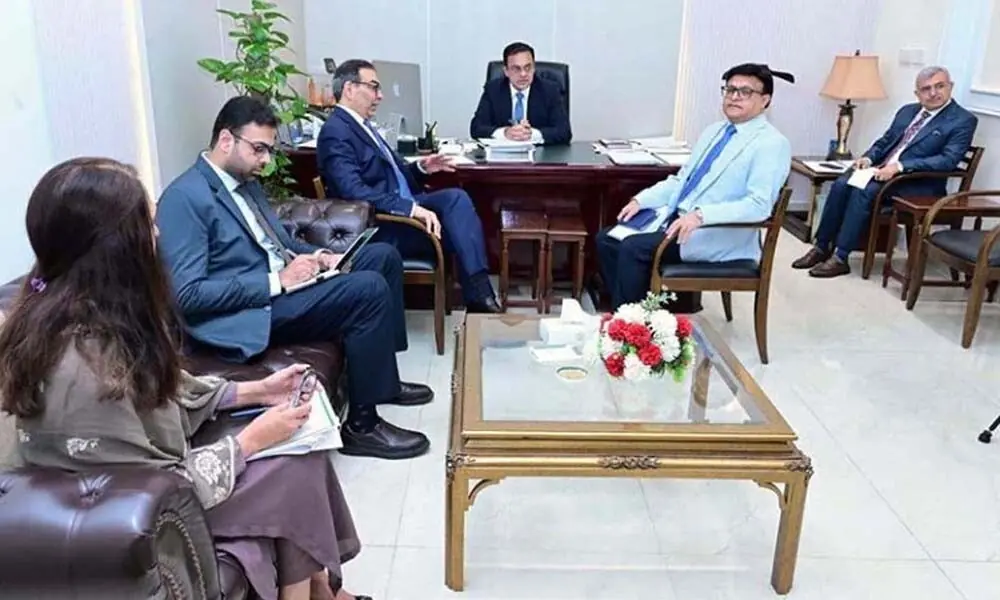
The Minister issued these directions while chairing a high-level meeting to review Pakistan’s pipeline of PPP projects, including potential projects in railways, highways, power, civic infrastructure and airports.
“We ask Overseas Pakistanis to invest in Pakistan; we must also provide them with credible, convenient and professionally structured avenues to do so,” the Minister said. He directed officials to explore an investment fund or similar mechanism through which Overseas Pakistanis could participate in major infrastructure projects without having to directly establish or manage businesses in the country.
He said the proposed mechanism should offer transparent and commercially attractive investment opportunities with appropriate safeguards and clearly defined returns. Such a platform could channel overseas savings into productive national assets, including railway and highway projects, while opening an additional source of financing for the country’s infrastructure requirements.
Advisor to the Prime Minister on Privatisation Muhammad Ali welcomed the proposal and agreed that it should be examined in detail for development into a workable investment framework.
Reviewing the Main Line-1 (ML-1) railway project, Cheema made it clear that the government’s priority would be to pursue financing through multilateral and development partners. With the Karachi-Rohri section being pursued with the Asian Development Bank, he directed that PPP options for the remaining sections should be retained as a secondary option rather than pursued as the primary financing route at this stage.
The Minister, however, directed P3A to undertake a feasibility assessment of the Lahore-Rawalpindi section of ML-1 under a potential PPP model, particularly considering its potential to substantially reduce travel time between the two cities. He said the assessment would provide the Government with an alternative financing option if required, while efforts with multilateral development partners remain the priority.
The meeting also reviewed the Kharian-Rawalpindi Motorway project. The Minister noted that approval had been received from the Prime Minister’s Office and directed P3A, NHA and other concerned authorities to move swiftly on the required technical and preparatory work. He called for tangible progress on the preparatory process within the next three months.
In the power sector, Cheema backed moving ahead with the Advanced Metering Infrastructure (AMI) smart metering project through the PPP framework, observing that modern metering infrastructure could improve the operational and commercial profile of power distribution companies. He said the initiative could also add value to the Government’s planned privatisation of DISCOs and directed that the proposal be taken forward on priority.
Reviewing projects proposed by the Capital Development Authority, the Minister identified the Gandhara Culture project and expansion of Capital Hospital as potential candidates for the PPP framework and directed P3A and the concerned authorities to assess and advance the projects on the basis of their commercial and technical viability.
The meeting also reviewed other prospective projects of CDA and NHA as well as airport projects planned to be brought to the market in 2027 and 2028. Cheema directed that the overall pipeline be further refined in consultation with relevant ministries and executing agencies, with greater focus on projects capable of attracting credible private-sector investment.
The Minister called for a more proactive and results-oriented approach towards Pakistan’s PPP portfolio, directing that viable projects should not remain stuck at the conceptual stage but be converted into bankable proposals with clear timelines.
He further directed that the PPP project pipeline be reviewed regularly at the highest level, with mature and commercially viable projects placed before the Prime Minister for consideration. He said efforts would be made to hold regular meetings under the Prime Minister to review progress and remove bottlenecks in priority PPP projects.
Cheema emphasised that PPPs should become an effective instrument for mobilising private capital for national development, particularly in infrastructure-intensive sectors where innovative financing could complement limited public-sector resources.
He directed P3A and all concerned ministries and agencies to strengthen coordination, accelerate technical and financial assessments and prepare a prioritised pipeline of bankable PPP projects capable of attracting domestic, international and overseas Pakistani investment.
The meeting was attended by Advisor to the Prime Minister on Privatisation Muhammad Ali, Secretary Privatisation, CEO Public Private Partnership Authority (P3A), and relevant senior officials.
Copyright Business Recorder, 2026



















Comments