

CAREC corridors to connect Central Asia with global markets, says Ahsan Iqbal
- Pakistan ready to take over CAREC chairmanship and host 26th Ministerial Conference in 2027, Planning minister says
Pakistan's Minister Ahsan Iqbal urged transforming CAREC transport routes into next-generation economic corridors, integrating infrastructure, digital connectivity, energy, and climate resilience for regional prosperity and trade.
- Integrating infrastructure, logistics, and digital connectivity.
- Establishing logistics and production hubs along corridors.
- Regional energy cooperation and climate-resilient infrastructure.
- Coordinated planning and cross-border cooperation.
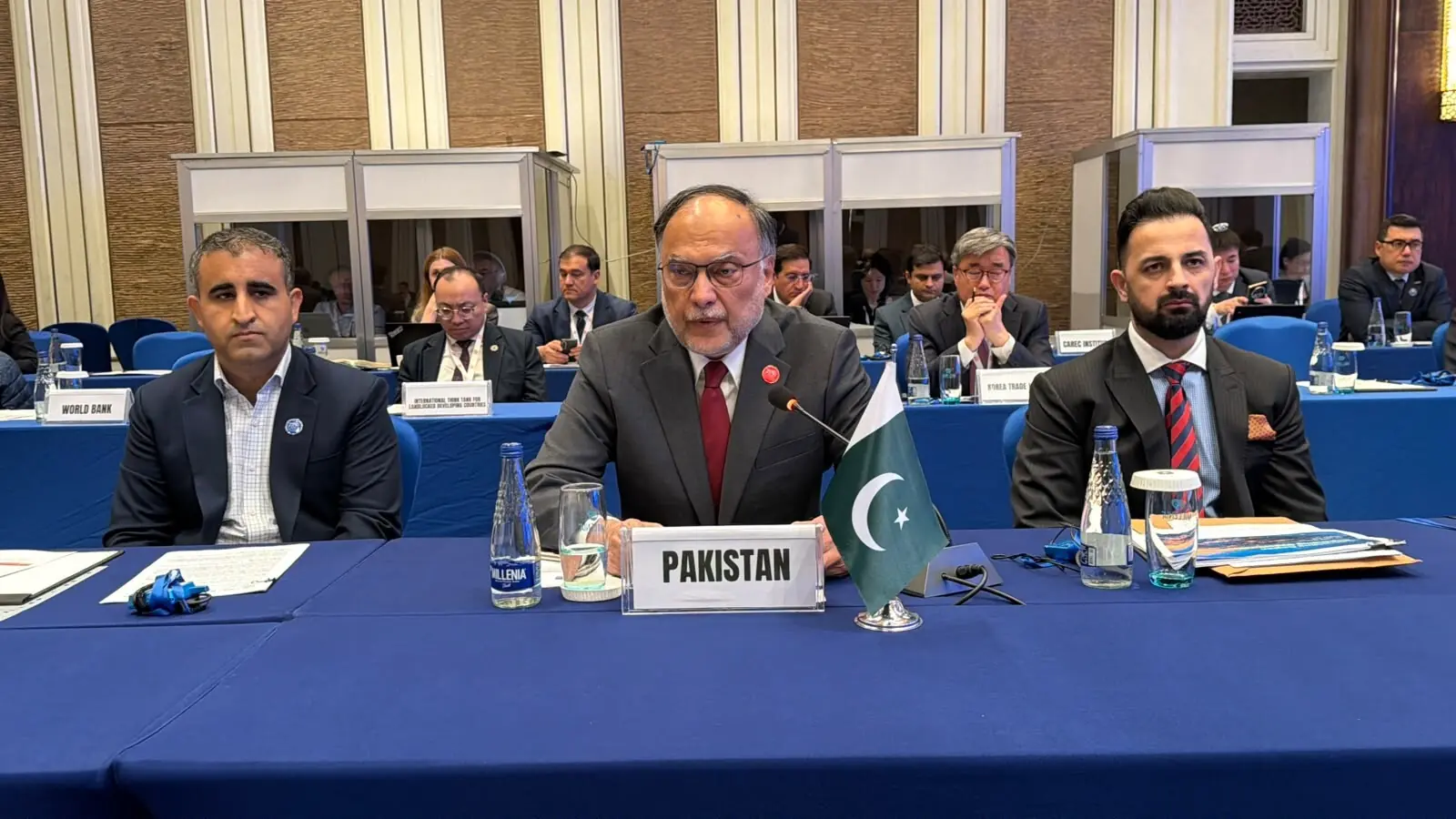
Federal Minister for Planning, Development and Special Initiatives Ahsan Iqbal on Tuesday called for transforming CAREC transport routes into next-generation economic corridors by integrating infrastructure, logistics, digital connectivity, energy cooperation and climate resilience.
Participating in a session of the 25th Central Asia Regional Economic Cooperation (CAREC) Ministerial Conference in Ulaanbaatar, the Minister said Pakistan viewed CAREC Corridors 5 and 6 as an opportunity to connect Central Asia with the Arabian Sea and generate economic activity along the routes, according to a ministry statement.
“The question is no longer simply, ‘Can a truck travel this route?’ It is, ‘Can a business use this route reliably, competitively and profitably?’” he said.
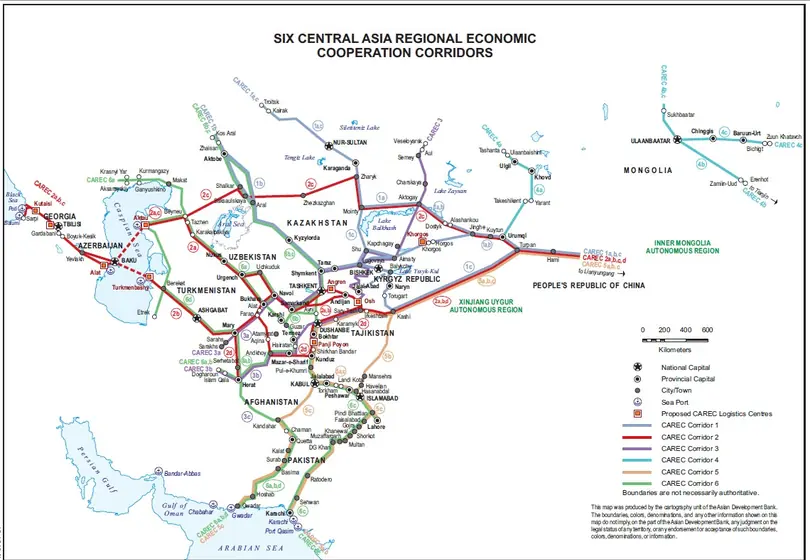
The CAREC programme focuses on the development of six primary multimodal transport corridors that link north, south, east, and west across Eurasia.
Iqbal said the transformation of regional corridors required completion of the transport chain through upgraded CAREC roads, modern border facilities at Torkham and Chaman, stronger rail freight capacity through the proposed ML-1 upgrade, and efficient links to dry ports and seaports.
He stressed the need to establish logistics and production hubs along strategic locations, saying cold storage, packaging, warehousing and light manufacturing could transform transit traffic into exports, jobs and value for communities along the corridors.
The minister also called for building a digital corridor across the CAREC region, noting that Pakistan Single Window (PSW) provided a foundation for phased digital integration with regional partners. “A consignment’s documents should be checked before it reaches the border,” he said.
Highlighting the importance of regional energy cooperation and climate resilience, Iqbal said initiatives such as CASA-1000 demonstrated the potential of cross-border energy connectivity, while new roads, railways and logistics infrastructure must be designed to withstand floods and extreme heat.
“The transformation occurs when a corridor carries more than cargo: it carries investment, technology, energy and opportunity,” he said.
Responding to a question on regional actions needed to ensure shared benefits, the minister emphasised coordinated planning of entire corridors, stronger cross-border cooperation and measuring the impact of connectivity on businesses and communities.
He said CAREC countries should identify priority cross-border projects, prepare them to common standards and coordinate investment and construction schedules, with the Asian Development Bank playing a role in mobilising financing, including private investment where appropriate.
The minister called for treating borders as a shared service, with compatible operating hours, advance electronic information, coordinated procedures and fewer repeated checks. He also emphasised the need to measure border delays, delivery times, local employment, SME participation and opportunities for women and youth.
“Regional cooperation succeeds when a trader can predict the journey, a farmer can reach a distant market without losing the harvest, and communities along the corridor share in its prosperity. That is how we move from connectivity to competitiveness,” Iqbal said.
Earlier, addressing the opening session of the 25th CAREC Ministerial Conference under the theme 25 Years of Partnership, Shaping the Future Together, the minister said Pakistan looked forward to assuming the CAREC Chairmanship in 2027 and hosting the 26th Ministerial Conference.
He said Pakistan, located at the intersection of Central Asia, South Asia and maritime routes, sought to turn its geographical position into an engine of shared regional growth through stronger connectivity, trade, digital integration and regional value chains.
On the sidelines of the 25th CAREC Ministerial Conference in Ulaanbaatar, he witnessed the signing of a memorandum of understanding between the CAREC Capital Markets Development Forum (CMDF) and the ASEAN Capital Markets Forum (ACMF). The MoU aims to strengthen cooperation and facilitate greater connectivity between the capital markets of CAREC and ASEAN member countries, creating opportunities for knowledge sharing, regulatory cooperation and deeper regional financial integration.


















Comments