


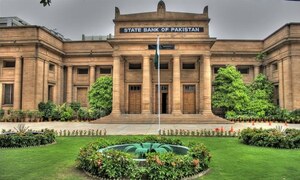
LAHORE: State Bank of Pakistan (SBP) Governor Jameel Ahmad said that the country’s economy has made considerable progress toward macroeconomic stability since 2022, with inflation easing toward the target range, the external account holding steady and growth recovering gradually.
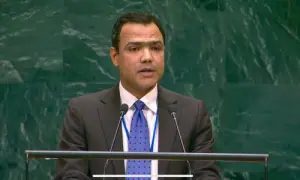
The governor expressed these views while addressing the Lahore Convocation of the ICMA International. He said Pakistan had contained the impact of significant supply shocks on the domestic economy despite persistent challenges.
He said inflation stayed close to the target range in 2026, though it has risen slightly since. It is projected to ease gradually, supported by prudent monetary policy. The current account deficit is expected to remain between zero and one per cent of GDP, while real GDP growth recovered from a contraction in 2023 to 3.7 per cent in fiscal year 2026 and is forecast to rise further this fiscal year.
Ahmad added that international credit rating agencies, multilateral partners and foreign investors are increasingly recognising the improvement in fundamentals and resilience.
Reflecting on the difficult period of 2022 and 2023, the governor said the key lessons were the need for timely policy decisions, fiscal discipline and strong institutions. He stressed that policymakers must act decisively even when decisions are unpopular.
He acknowledged that the corrective measures drew criticism, but said policymakers stayed focused on economic realities and the long-term cost of inaction. “These tough but necessary measures were essential to restore macroeconomic stability and avert a deeper external financing and debt crisis,” he said.
The government, he noted, also stuck to fiscal consolidation despite calls for short-term stimulus that would not have addressed structural weaknesses. Lasting progress, he said, cannot come from temporary fixes at the expense of long-term stability.
Ahmad said effective policymaking must be forward-looking, evidence-based and backed by strong institutions. Keeping the real policy rate positive on a forward-looking basis, he said, helped bring inflation down from more than 30 per cent to within the medium-term target range.
He also underlined the importance of spotting macroeconomic risks early, saying timely identification and management had prevented deterioration in the financial sector’s capital adequacy and performance indicators, which have instead strengthened in recent years.
Drawing parallels with professional life, Ahmad told the graduates that the principles of sound policymaking apply equally to running companies, advising institutions, overseeing public funds or making investment decisions. He said they would often face situations where the right decision is not the easiest or most popular, and urged them to make difficult choices guided by evidence, professional ethics and a long-term commitment to Pakistan’s sustainable and inclusive development.
He also paid tribute to ICMA-qualified professionals serving in senior roles at the central bank and across the financial industry, many of whom, he said, have contributed significantly to banking supervision, institutional strengthening and the development of the regulatory framework.
The ICMA qualification, he observed, equips professionals with skills for responsible leadership, including interpreting data, evaluating information from multiple sources, assessing risk, allocating resources efficiently and making informed decisions with integrity.
Ahmad called for institutions that generate reliable information, enforce accountability and reward productivity. A well-functioning accounting profession, he said, helps businesses decide on the basis of sound financial information, enables governments to use public resources responsibly and supports financial systems in channelling savings into productive investment.
The profession’s role, he added, goes well beyond recording transactions and preparing financial statements: at its best, it builds trust, strengthens governance, improves resource allocation and ensures decisions rest on credible information and accountability.
Concluding his address, the governor congratulated the graduates and expressed confidence that they would use their skills to contribute to Pakistan’s economic progress and help shape its future economic landscape.
Copyright Business Recorder, 2026



















Comments