

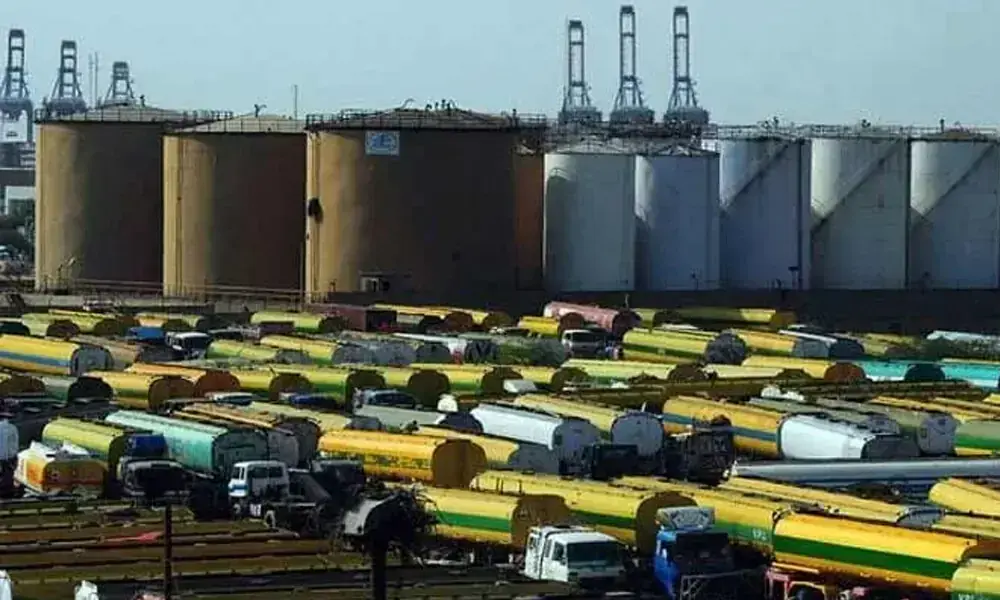
ISLAMABAD: The government on Thursday ruled out additional fuel conservation measures, telling the National Assembly that the country had petrol stocks sufficient for 22 days and diesel reserves for 30 days, with supplies being closely monitored and imports planned to prevent shortages.
In a written reply to a question by MNA Sharmila Faruqui, Minister for Petroleum Ali Pervaiz Malik said existing austerity measures would remain in place, adding that current petroleum stocks were sufficient to meet the country’s requirements.
He said petrol stocks stood at around 395,000 tonnes as of September 22, while cargoes at berth and outer anchorage brought total availability to approximately 506,000 tonnes. The quantity was equivalent to about 22 days of supplies at average daily sales of 22,500 tonnes.
READ MORE: Markets to close at 9pm as govt notifies fresh austerity, fuel conservation measures
Diesel stocks totalled around 568,000 tonnes, sufficient for approximately 30 days at average daily consumption of 19,000 tonnes, he added.
The minister said the government had planned petrol imports of about 511,000 tonnes for September against projected demand of 692,000 tonnes and domestic refinery supplies of 262,000 tonnes.
No diesel imports had been planned, he added, citing healthy opening stocks and anticipated refinery supplies of around 555,000 tonnes.
Malik said the government assessed demand, refinery output and import requirements on a monthly basis.
The oil and Gas Regulatory Authority (Ogra) coordinated with refineries, oil marketing companies and the Petroleum Division to ensure uninterrupted supplies, he added.
Explaining fluctuations in petrol sales, the minister said they had risen by around 18 per cent year-on-year in July, significantly higher than the growth of about five per cent generally recorded in previous years.
The increase may have been driven by summer tourism and advance inventory-building by dealers, he said.
Petrol sales subsequently declined by around nine per cent in August compared with July, indicating a normalisation in fuel purchases, he added.
The minister also said petrol and diesel prices were linked to a rolling average of seven working days of Platts free-on-board Arab Gulf prices.
Ogra was authorised to calculate and publish daily ex-depot prices without prior approval from the federal government or the prime minister, he said.
To prevent hoarding, diversion and misuse of petroleum products, oil marketing companies had been directed to investigate abnormal sales at retail outlets.
Ogra field teams could also coordinate with provincial law-enforcement agencies to investigate suspected violations and take action under the relevant laws, the minister added.
On payments to oil marketing companies, Malik said the government had disbursed Rs53.8 billion against total price-differential claims of Rs120.3 billion.
Further payments were subject to verification of supporting documents and an audit by an Ogra-appointed auditor, he said, adding that the claims were under review and additional disbursements would be made after completion of the prescribed checks.
Copyright Business Recorder, 2026



















Comments