


As Pakistan prepares to welcome international investors, mining companies and industry experts at the Pakistan Minerals Investment Forum in Islamabad next week, it is important to look beyond the immediate objective of attracting investment. The real challenge is to develop a mineral sector that creates lasting economic value for Pakistan, builds domestic technological capabilities and generates industrial growth and employment.
Pakistan is richly endowed with mineral resources, yet much of this potential has remained unexploited for decades. The question we must ask is not simply why we have failed to attract investment, but why successive governments have been unable to translate known mineral potential into commercially viable projects and a thriving mining industry.
There are important lessons to learn from our past and missed opportunities. Minerals have historically been a provincial subject in Pakistan, well before the 18th Constitutional Amendment. Provinces therefore had both the responsibility and the opportunity to develop their mineral resources and build the institutional capacity required to manage them. Unfortunately, this responsibility was not adequately fulfilled.
The federal government, meanwhile, also failed to make full use of some of the country’s valuable technical and professional institutions. The Geological Survey of Pakistan (GSP), Pakistan Mineral Development Corporation (PMDC) and National Institute of Oceanography (NIO) represent accumulated national expertise that could have played a much greater role in developing our mineral resources.
The Resource Development Corporation (RDC), which no longer exists in its original form, was another important example. It initiated the exploration and development work at Saindak, one of Pakistan’s earliest major mining projects. These institutions and their successors should have been strengthened and developed into effective instruments of national mineral development.
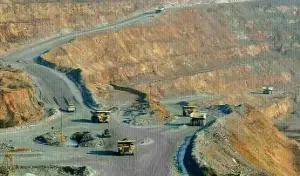
The experience of Saindak, the prolonged development of Thar coal and the history of Reko Diq all deserve a serious institutional review. Delayed decisions, inadequate preparation, changing approaches and weak coordination have cost Pakistan valuable time and opportunities. While progress is now being made, we must understand what went wrong rather than simply move forward without learning from experience.
Pakistan does not need to build every capability from scratch. It needs to revitalise its existing institutions, update their technology, strengthen their professional capacity and give them clear responsibilities in the next phase of mineral development.
Investment must bring technology and skills
Foreign investment is essential, particularly for large-scale exploration and mining projects that require substantial capital, specialised technology and the capacity to bear geological and commercial risks.
However, joint ventures should not be assessed merely on the basis of investment commitments or the size of the mineral deposits they propose to develop. They should also be evaluated on the lasting capabilities they create within Pakistan.
Technology transfer, local skill development and training of Pakistani professionals should form measurable components of major joint-venture agreements. These should include commitments to train Pakistani geologists, mining engineers, metallurgists and technical managers, progressively increasing their participation in senior technical and operational positions.
Pakistan should emerge from these partnerships with more than operating mines. It should acquire the expertise and technological capabilities to undertake increasingly sophisticated exploration, extraction and processing activities independently.
Move from extraction to value addition
Another major priority should be the development of domestic mineral-processing facilities. Extracting copper, gold, lithium, rare earth elements and other minerals is only the beginning of the economic opportunity. Considerable additional value can be generated through beneficiation, concentration, refining, smelting and downstream manufacturing.
Pakistan should encourage commercially viable processing facilities alongside mining projects rather than automatically settling for the export of raw or minimally processed minerals.
This does not mean imposing uneconomic processing requirements. Energy availability, infrastructure, water, economies of scale and access to international markets must all be considered. But domestic value addition should be a central consideration in investment policy.
The longer-term objective should be to develop mineral-based industrial clusters, attracting engineering companies, equipment manufacturers, technology providers and downstream industries around major mining projects.
Modernise the domestic mining industry
Particular attention must also be given to local mining companies, many of which lack access to modern exploration techniques, equipment and professional expertise. Local service providers from private sector, should be in a position to provide high quality exploration, production and other auxiliary services by offering best equipment and highly experienced professionals; if need be, through international collaborations.
Proper geological investigation, resource estimation, mine planning and extraction techniques are essential to maximise recovery and profitability. Poor exploration and inefficient extraction can leave valuable resources unutilised, increase operating costs and damage the long-term economic potential of a deposit.
The government, universities, geological institutions and private-sector associations should jointly develop technical assistance and training programmes for local mining enterprises. Access to modern machinery, laboratories, professional geological services and financing should be improved.
Equally important are enforceable laws and regulations covering responsible mining, workers’ health and safety, environmental protection, mine waste management and rehabilitation. Worker safety cannot remain a secondary consideration. Responsible mining practices are essential both for human welfare and the long-term sustainability of the industry.
Clarity in federal-provincial relations
The division of responsibilities between the federation and provinces must not become a recurring source of uncertainty for investors. It may also not become source of baseless debates on media.
Provincial ownership and constitutional responsibilities must be respected, but national economic interests also require effective coordination. Provinces should have clear authority and capacity in mineral licensing, regulation and resource management, while the federation can contribute through national investment policy, international engagement, geological information, infrastructure coordination and export facilitation within its constitutional responsibilities.
A permanent federal-provincial coordination mechanism could help resolve overlapping responsibilities, improve policy consistency and provide investors with a predictable institutional framework. Provincial rights and national economic interests should be treated as complementary rather than competing objectives.
Transparency, security and investor confidence
Investors need clear and predictable rules governing licensing, royalties, taxation, land access, environmental obligations and dispute resolution. Mineral rights should be awarded through transparent and competitive procedures, with clear investment commitments and accountability.
Fair competition must apply equally to domestic and foreign companies. Opaque concessions, discretionary decisions and inconsistent regulations undermine confidence and discourage long-term investment.
Law and order also require attention. Mining projects, particularly in remote areas, need a secure operating environment for workers, infrastructure and investors. This is an important component of investment confidence and must be addressed through effective coordination between the relevant authorities.
Local communities should also become economic stakeholders through employment, training, infrastructure development and opportunities for local businesses to participate in mining supply chains.
Measure success by what Pakistan gains
The success of our mineral policy should not be measured simply by the number of investment agreements signed, the amount of foreign capital announced or the volume of minerals extracted.
We should measure it by the value added within Pakistan, the technology transferred, the skills developed, the growth of local enterprises, the employment generated and the contribution made to provincial and national economies.
Pakistan has an opportunity to turn its mineral wealth into a major source of industrial development, foreign exchange, technological advancement and employment. The objective must therefore be much greater than attracting companies to extract our minerals. It must be to build a competitive national mining and mineral-processing industry through investment, technology, institutional development and responsible resource management.
Our mineral wealth should not simply be extracted. It should become the foundation of our industrial and economic future.
The article does not necessarily reflect the opinion of Business Recorder or its owners.
The author has 40 years of experience in the oil and gas, power, mineral and water resource management industries. He is currently working as Regional Head at Bore and Bore Consolidate

















Comments